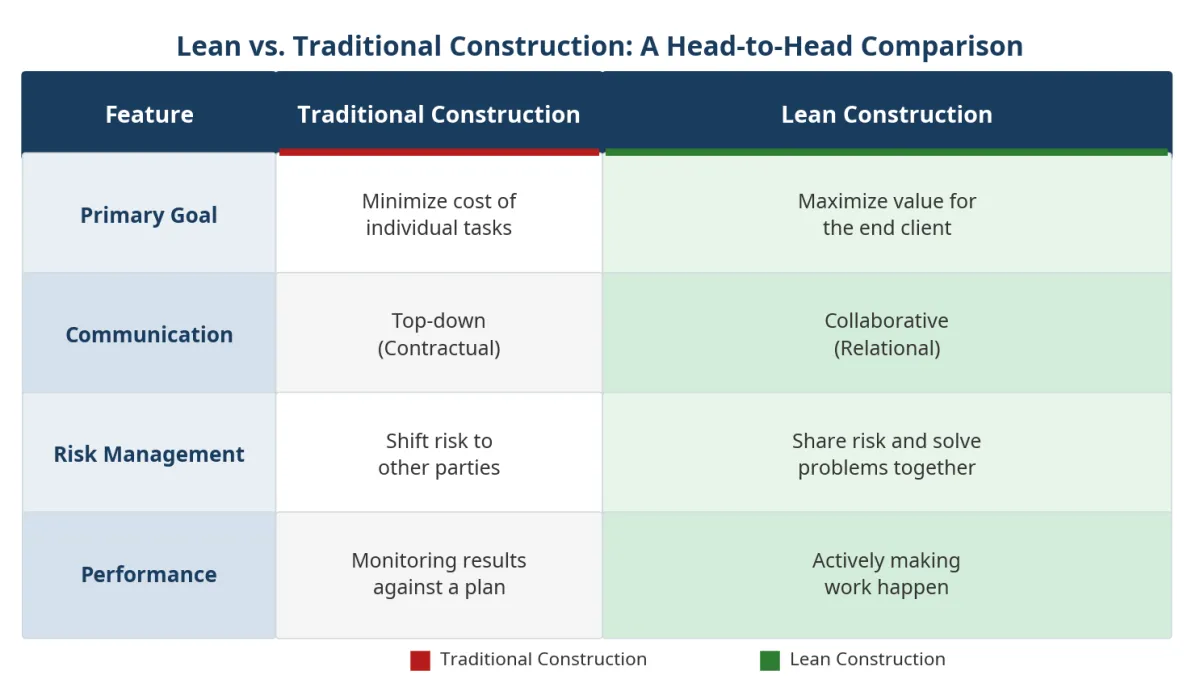
Lean vs. Traditional Construction: A Head-to-Head Comparison
In the construction world, we often hear the phrase, "That’s just how it’s always been done."
But as margins tighten and labor shortages grow, "how it’s always been done" is becoming a recipe for disaster. If you’re still operating under a traditional project management mindset, you’re likely leaving money on the table. Here is a head-to-head breakdown of Traditional Construction versus Lean Construction, and why the shift is no longer optional.
The Fundamental Mindset: Silos vs. Systems
In a Traditional model, the project is viewed as a series of isolated tasks. The plumber does their job, the electrician does theirs, and the GC tries to smash them together. Success is measured by whether individual trades hit their specific goals.
Lean Construction views the project as a single, integrated system. It recognizes that if the plumber finishes early but leaves the site a mess for the electrician, the project as a whole has actually lost efficiency.
2. How we Schedule: "Push" vs. "Pull"
This is perhaps the biggest technical difference between the two styles:
● Traditional (Push): A Project Manager creates a Master Schedule in a vacuum. They "push" dates onto the subcontractors. When one trade falls behind, a domino effect of delays ripples through the entire timeline.
● Lean (Pull): Uses Pull Planning. The "Last Planners", (the people actually doing the work) work backward from a milestone. A task is only started when the person performing the next task is ready for it. This creates a "flow" that prevents the dreaded "wait-time" waste.
3. The Definition of Waste
In a traditional setup, waste is usually defined by what goes into the dumpster. If you didn't throw away too many 2x4s, you're doing okay. Lean looks deeper. It identifies waste in movement and time. If a crew has to walk 200 feet to get to their tool station, or if they are waiting two hours for a delivery that was "pushed" too early, that is waste. Lean aims to maximize value-added activity—the actual time spent transforming materials into a building.